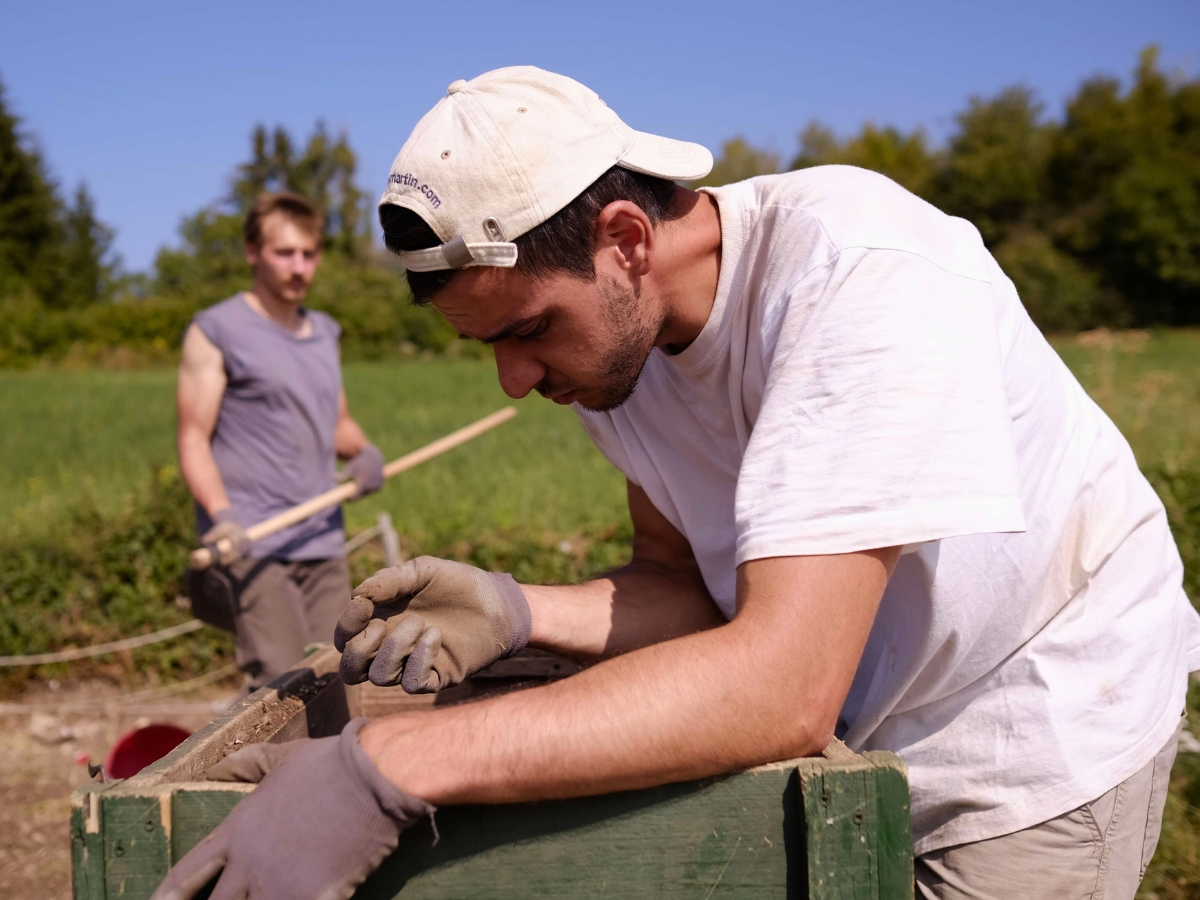

The archaeological site of Stobi in North Macedonia was a massive town in its zenith, so there were plenty of artifacts left for us to discover. Since it was my first time on a dig, every discovery no matter how small was incredible and made an impact on me. In our month on the dig we found hundreds of objects and I could write a whole book on all the objects we found but these are three of my favorites.
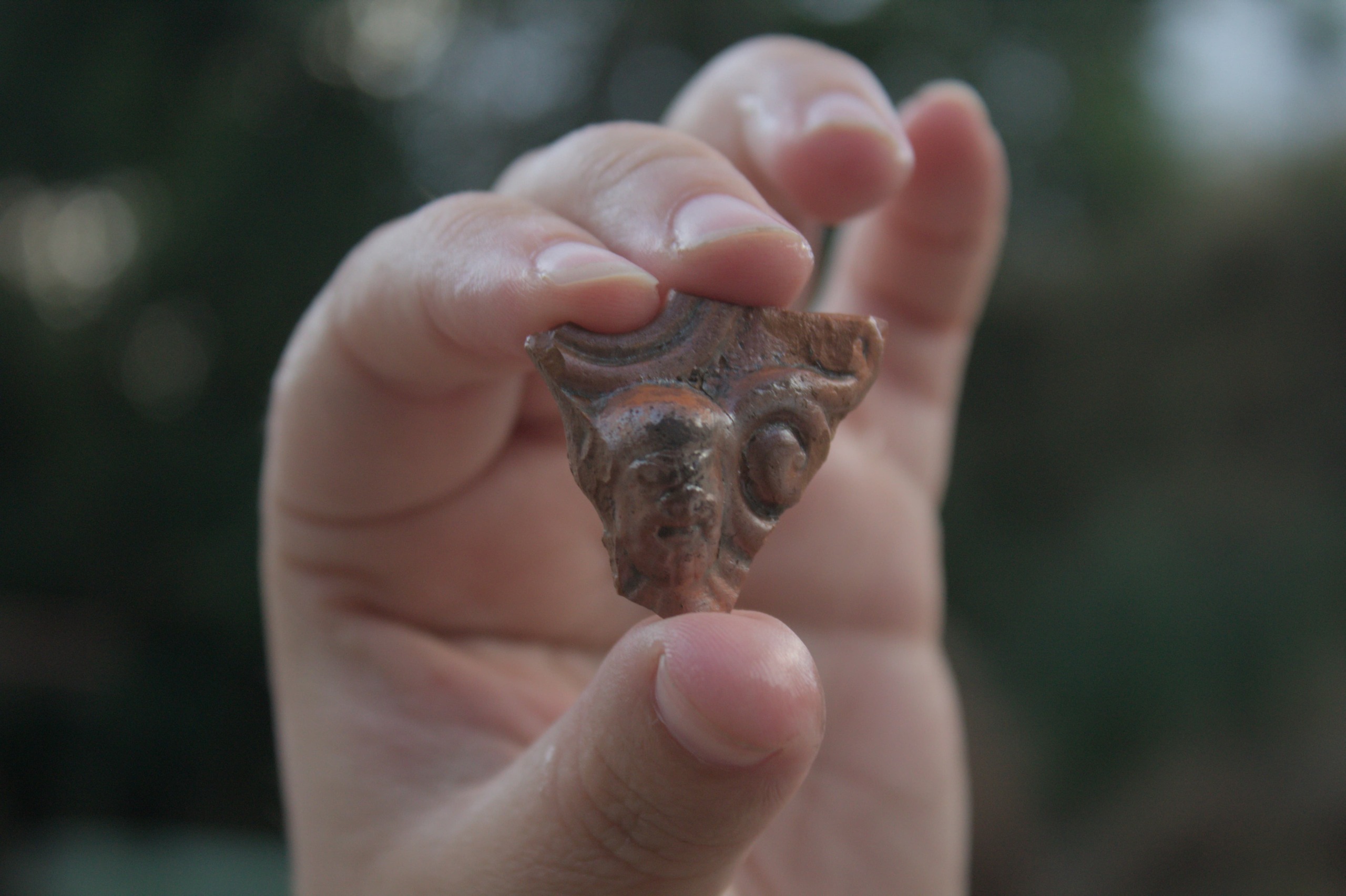
In one of the rooms our field school was excavating there were walls which had to come down as we were trying to excavate down to lower and older layers. Inside these walls we often found pieces of pottery or coins. One such piece was this beautiful pottery fragment. Even though the whole piece was broken, the image of a theatre mask survived. The site of Stobi had a large theatre where plays and gladiator fights would have taken place so this kind of imagery would be common to find. I chose this piece to showcase for two reasons. Historically it was important since the room it was found in was thought to be built over an old temple to Dionysus/Bacchus and this was another clue as to what would be in the layers below. On the other hand it was the first major artifact discovered by our field school so the excitement was electric when it was discovered. It made such a large impact on our group that one student even got a sketch of the piece tattooed on them during our dig.
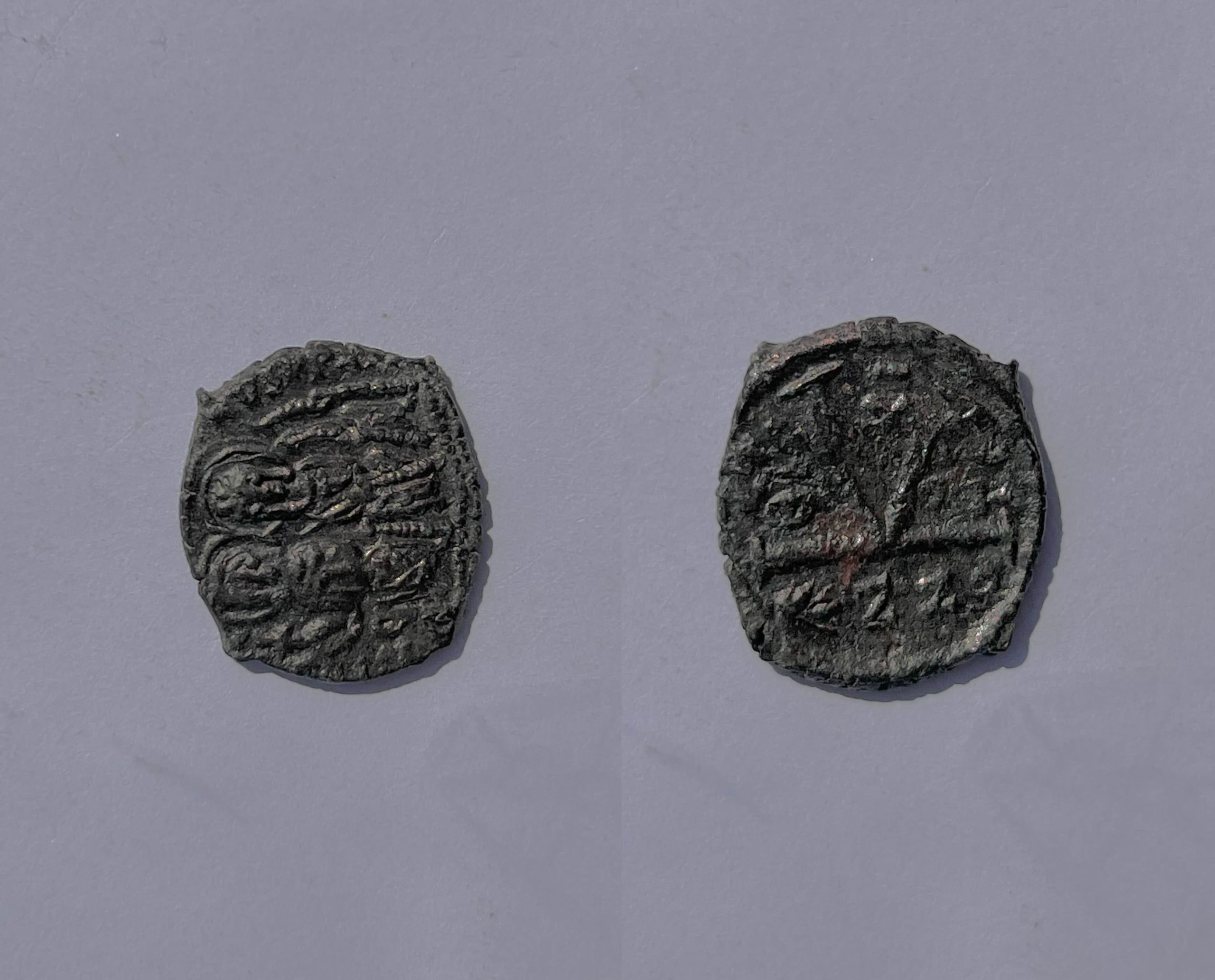
The second object I’d like to feature would be this coin depicting what is believed to be Emperor Justin II and his wife Sofia. Over the course of the dig we found a great many coins but out of all them this one stood out to me the most. This coin was special because it had been lost soon after being minted so it gave us a nice timeframe to which we could date the layer. Our instructor explained that the four protruding parts on the corners of the coin were actually leftover material from its creation and that most times when coins are found these parts are worn down from being handled often or cleaned up during its creation. So out of all the coins we found on the site this was the only one that had this unique trait.
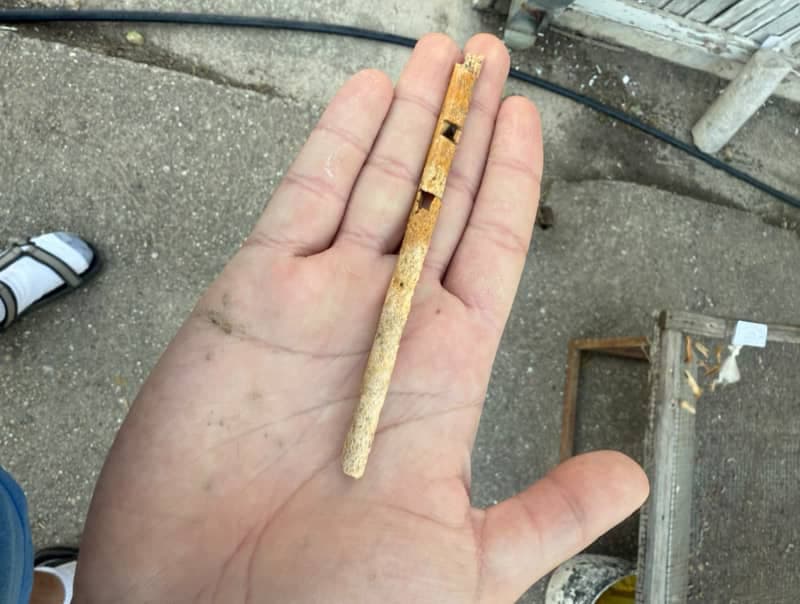
The third and final object out of many would be this bone flute. Now normally during the excavation we would know right away that we had a special object. Coins would be found when metal detecting and pottery with decoration was easy to spot even when covered in dirt. This piece however wasn’t on our radar at first. This piece was found among debris on an ancient Roman street. During our excavation of the street we found lots of discarded animal bones and broken bits of cooking pottery. This piece at first seemed to just be the leftovers from someone’s lunch and was placed in the bag along other pieces of bone. It wasn’t until we cleaned it up that we discovered it was a flute made from a bird bone. What made this find even more remarkable was that it had actually been discovered in two separate pieces, cleaned individually, and almost cataloged as unrelated fragments. It was only upon closer examination that I realized the two sections fit together perfectly, revealing that they were in fact a single complete instrument. Without that observation, the flute might never have been recognized as the unique and rare object it truly is.
These finds were just a few of many, but they reminded me why I fell in love with archaeology in the first place. Long buried and nearly forgotten, these objects connected us to people and moments from thousands of years ago. Being the first person in over a thousand years to look upon these cherished objects is a feeling few people will ever know and I am grateful for the opportunity to have been a part of this dig.
Share this article
Follow us
Latest articles
October 19, 2026
October 19, 2026