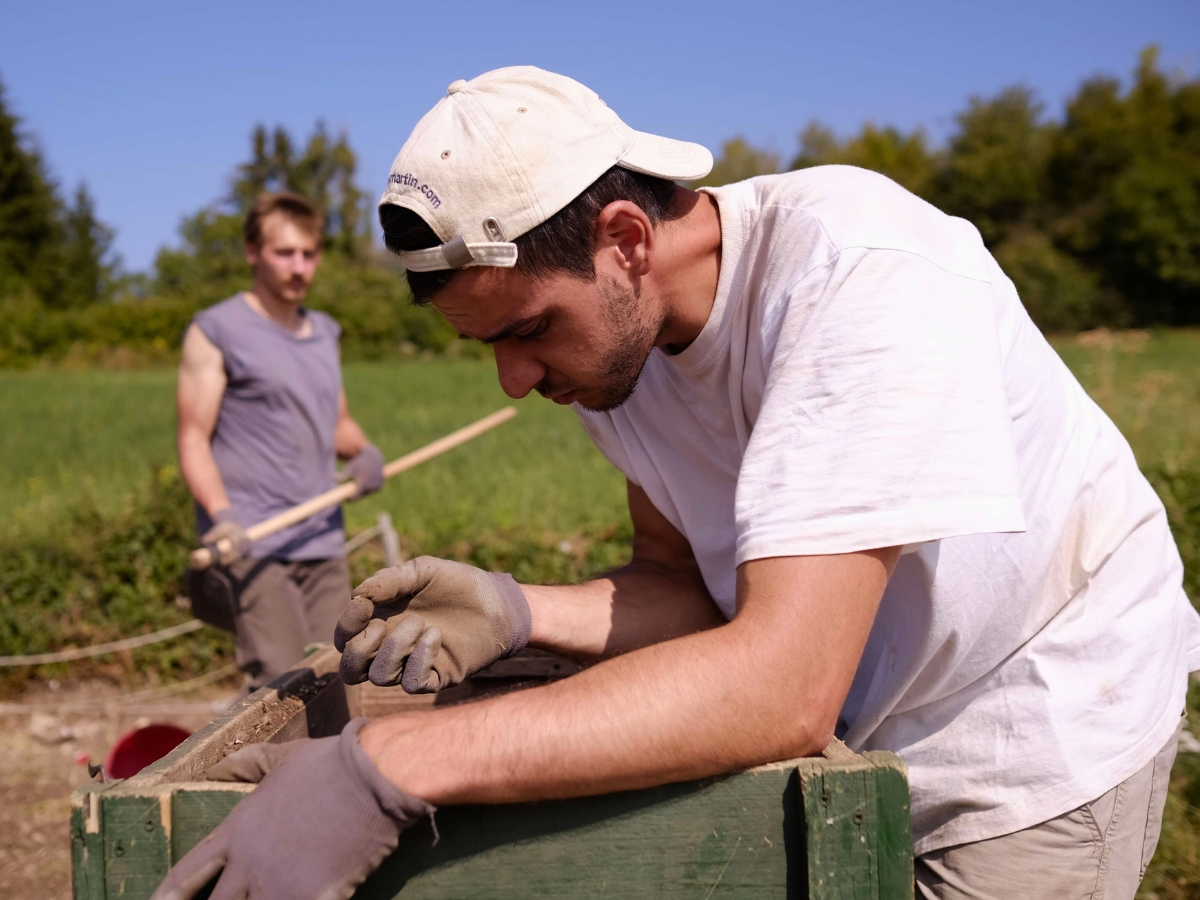
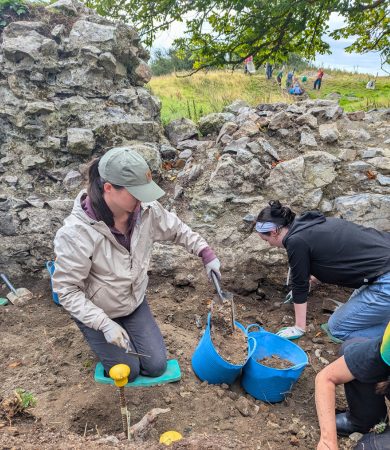
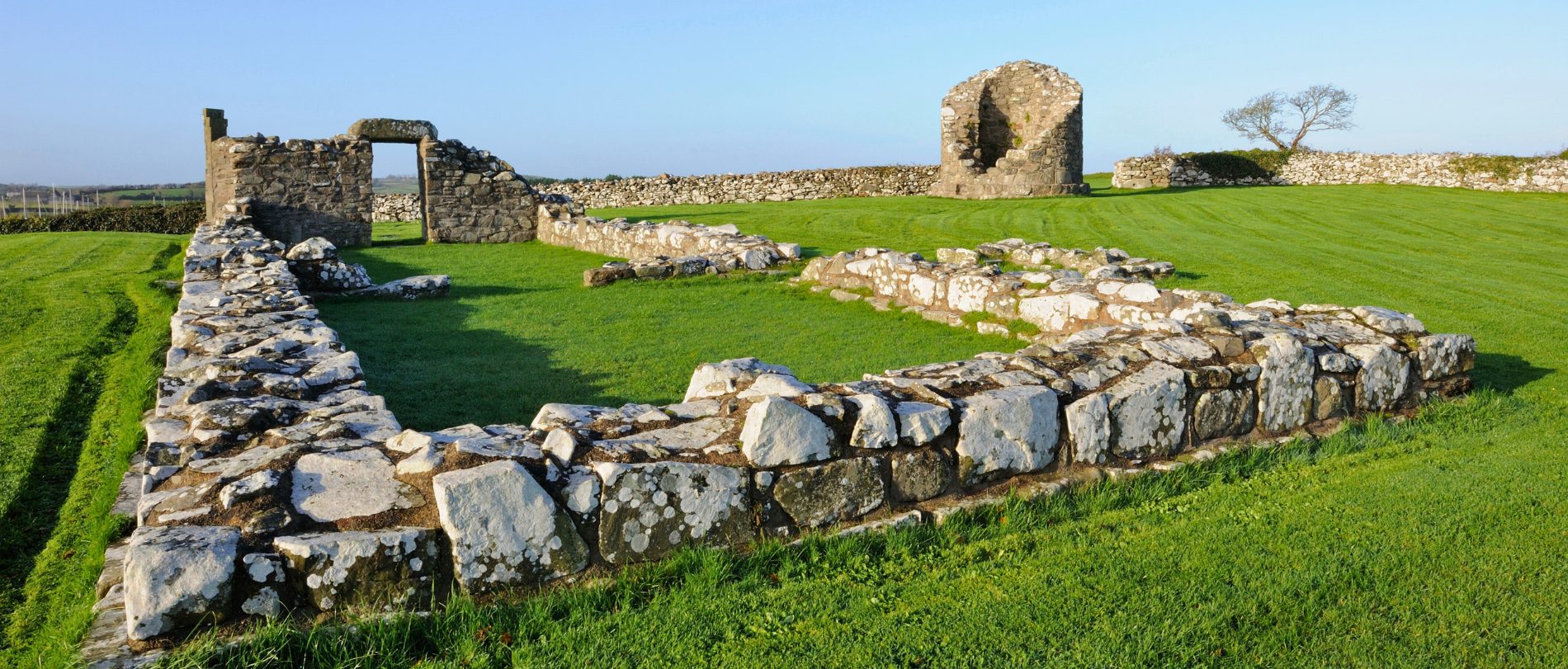
The white fluffy angular clouds showed hints of blue in the sky. The long green fields of grass peaked in the distance. Bright blue buckets stood straight on the ground filled to the top with dark brown soil. Meanwhile in the distance, students all around the site crouched on their knees, carefully brushing away dirt to reveal cultural material. While others stood next to the pits as they used large gray metal screens to sift through the dirt.
When I think back to my time at the field site in Ireland at Clonoghil Castle, one vivid memory comes to mind: the image of students and field directors working together seamlessly. The image of people coming together is no surprise. The field of archeology brings together a group of diverse individuals from specialists, students, and community members with unique skills and knowledge. There are various ways in which one may work in a team such as, during excavation, co-authoring research papers, working with community members, and analyzing cultural materials together. Truly each person who is part of the team is invaluable. For this reason, it is important to learn how to work and become part of a team as this is a key element in archaeology. Here are some helpful tips on how to work as a team based on my experience at the Irish Heritage School.
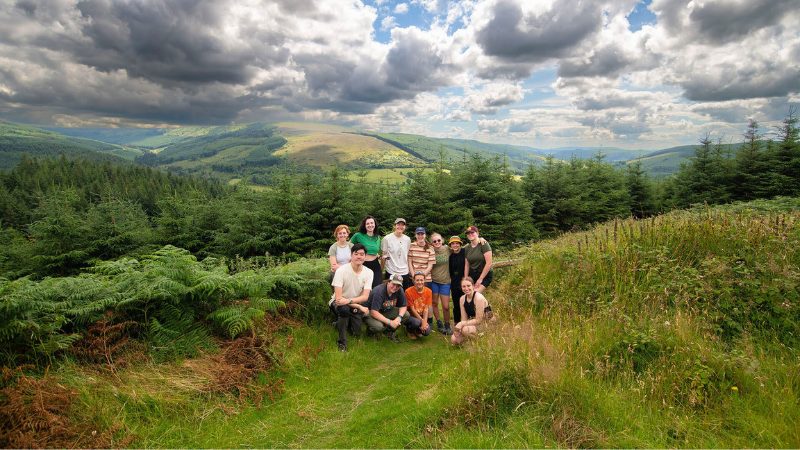
To begin, start by dividing the work and responsibilities. At the Irish Heritage school, each person was assigned into a group where they worked in different parts of the excavation. However, even within these groups, tasks were further divided and each person had their own responsibility. Try to establish what responsibilities each person in the team will hold by communicating with each other and ask if they have any preferences as to what task they want to do. Ensure everyone feels comfortable with their assigned role and rotate roles throughout the day. In the end, everyone on the team should have equal responsibility.
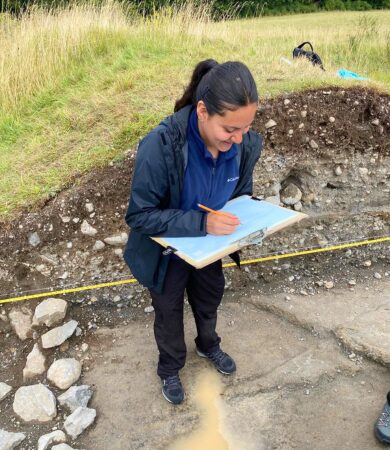
Next, be flexible. Fieldwork can be very unpredictable. One day you may be working hard excavating in the field and the other you may be stuck sitting down doing nothing due to a rainy day. Be prepared to adapt to weather conditions, lack of materials, and equipment malfunctions. In this case it is important to figure out solutions on how to best continue the day (if possible). When unpredictable conditions arise try to work together as a team and listen to each other’s ideas to find a solution. This creates a positive environment where suggestions are welcomed.
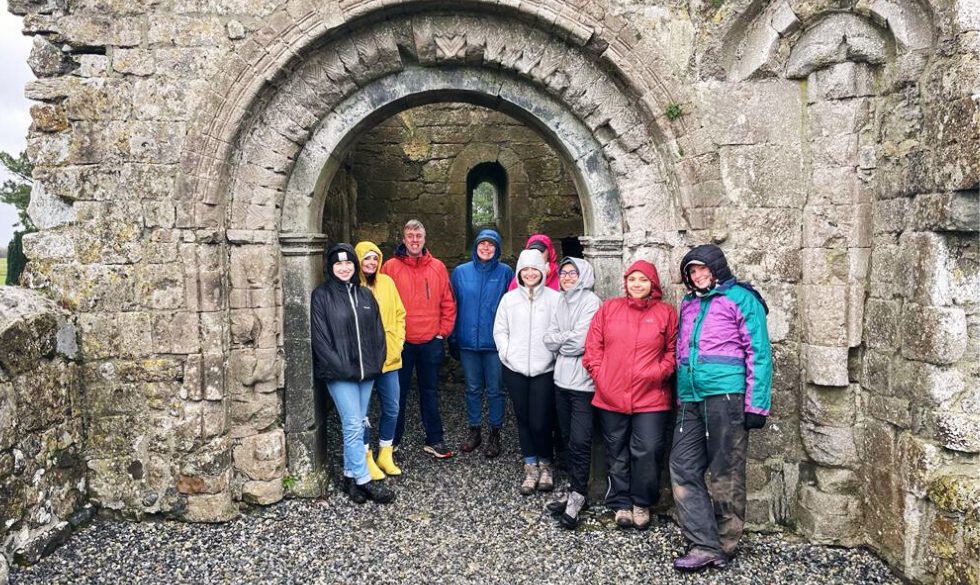
Finally, celebrate milestones together. Archaeology is a very important field that helps us understand the rich significance of past and present cultures, but it can also be very physically and mentally draining. Take the time to give each other a pat on the back for the achievements of both individuals and the team even if it’s something small like finishing an excavation day, finding an artifact, or overcoming a challenging day. Acknowledging each other’s efforts fosters a positive and welcoming team environment where everyone feels appreciated. This supportive environment encourages and motivates people to come back the next day and tackle another day of work together as a team.
Even though working as a team can sometimes be challenging, it also offers a valuable experience. My time at the Irish Heritage School taught me just how essential teamwork is in archaeology. Working with others in the field teaches you to actively listen to others ideas, teaches you accountability, and helps you develop leadership skills. Whether you are considering attending a field school or are preparing to go to a field school, I hope that these tips will be helpful for others considering attending a field school as teamwork is as important as any excavation technique.
Share this article
Follow us
Latest articles
October 26, 2026
October 26, 2026