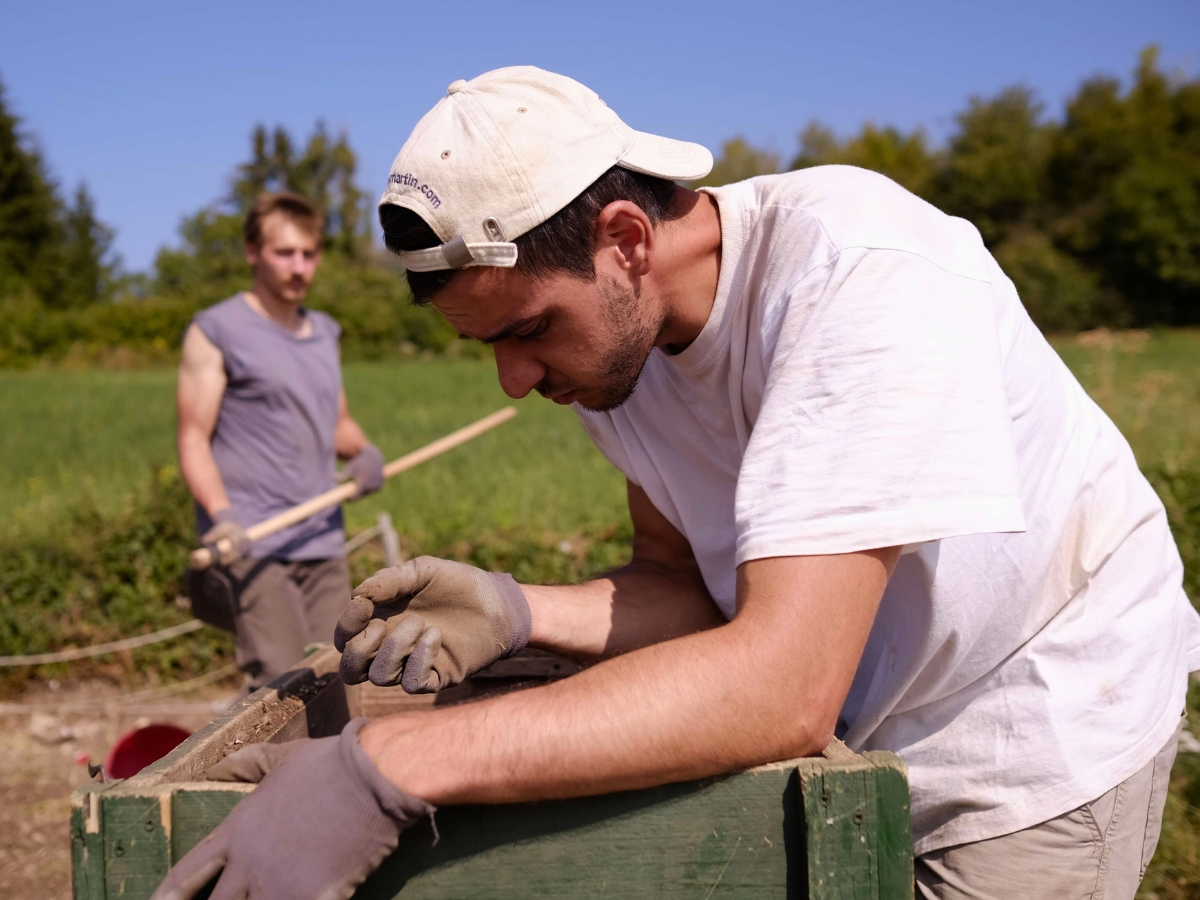

There can be so many unknowns when heading out to archaeology field school for the first time, and our alumni are a great resource to know what to expect. We caught up with Alex from our Zuleta Excavation in Ecuador to give a beginner-friendly breakdown of the most-used tools from his field school experience and why they are used.
The most used tools on and off the field were trowels, shovels, ropes, levels, wooden stakes, tape rulers, paint brushes, and tooth brushes. These were the most crucial tools on and off the field, whether it be on the sites or in the laboratory.
- Trowel
Trowels are vital tools for an archaeologist and are used for cleaning surfaces such as the floor or wall, and carefully exposing new levels of soil. They also help uncover fragile artifacts without harming them, as you would if you used a shovel. Trowels are also used to smooth the surface down and level it out.
2. Shovel
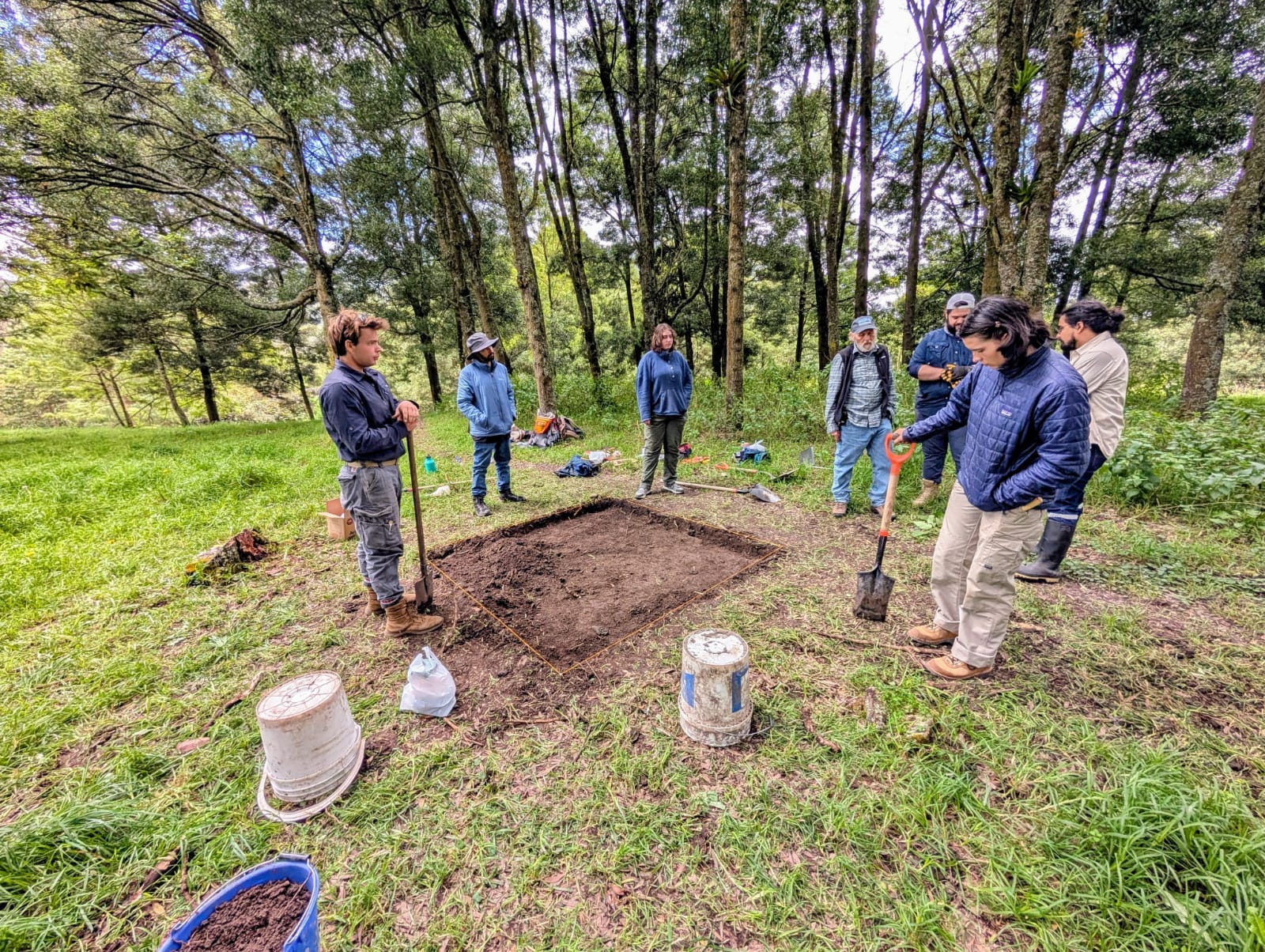
Shovels were used to quickly remove large amounts of loose soil from an excavation site, clearing areas, and can also be used for digging shovel test pits to find and define archaeological sites and cultural deposits. It allowed us to remove the soil and go down levels faster than we would if we primarily used a trowel to dig instead. Without a shovel/s, it would be very difficult to dig down 10 centimeters. Shovels have a broader purpose in moving large amounts of dirt and rocks and establishing site boundaries.
3. Rope
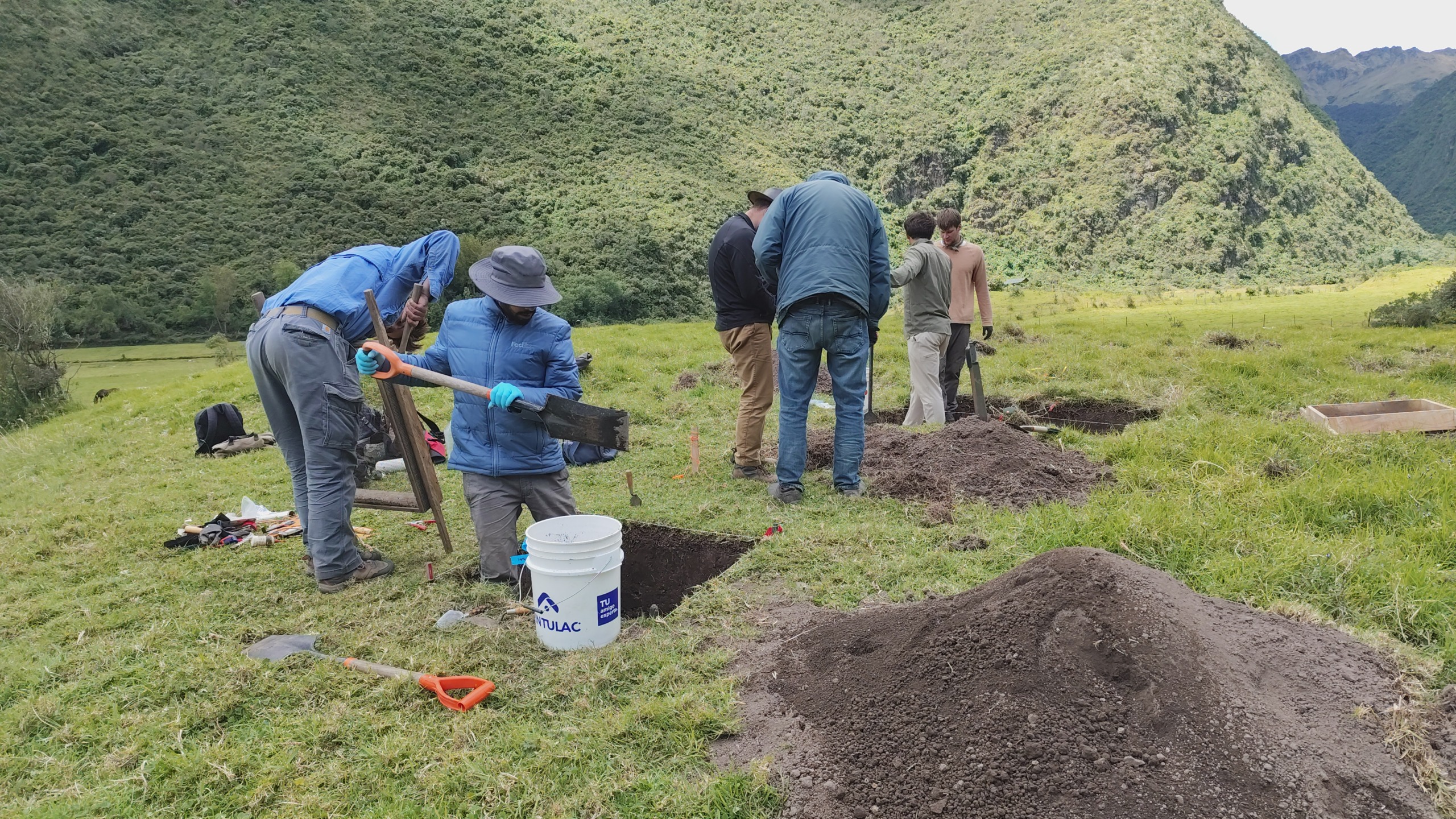
Ropes are used for multiple purposes, such as mapping out the grid and unit to establish where we will excavate. It’s also used with the level to show us our measurements on how far we dug down. It’s also used with the wooden stake and the rope together as a datum to help us establish our measurements of the surface to the bottom of the grid.
4. Level
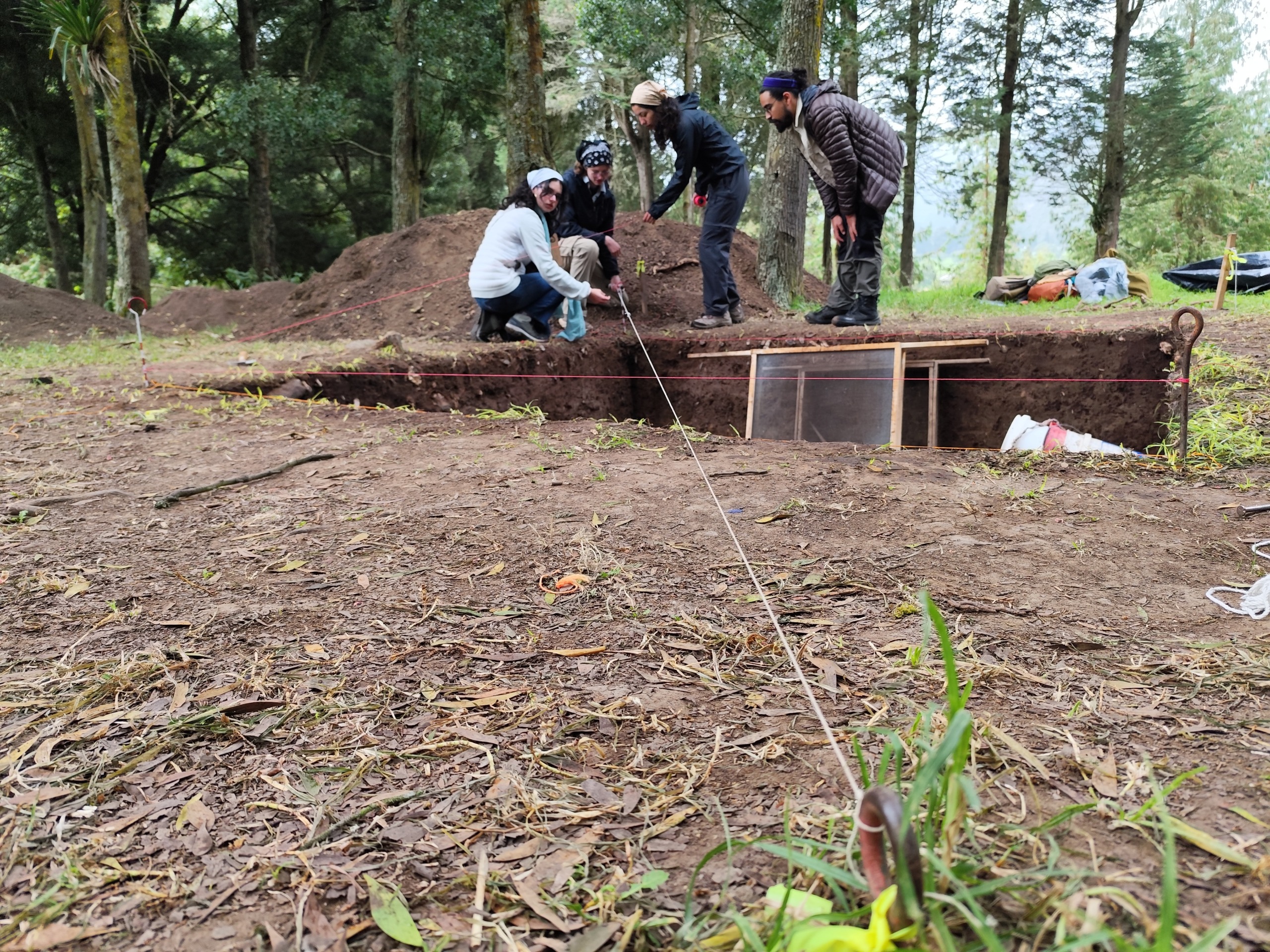
The levels are used to show if we are leveled or not at the datum point. The wooden stake is used as a datum pushed into the ground, tied with a rope, and is used to determine the measurements of the pit. The datum point is a fixed, stable point on an archaeological site from which all other measurements are taken.
5. Tape Measure
Tape rulers were used to obtain the measurements of the distance from the datum to the bottom of the grid, with the help of the datum and level.
6. Paint brush
The paint brushes were used to dust off any artifacts we found, such as ceramic sherds and features, to take off any dirt and be able to get a better diagnosis of them. They were also used to clean the surfaces of finds and to tidy up the dirt to get it ready for photographs. The paint brushes were used for delicate cleaning and excavation of artifacts and features to avoid causing damage. Brushes give precise control to clear away fine layers of dirt, sand, and dust without scratching or breaking fragile items. This was a crucial step in preserving the historical context and physical integrity of the finds to keep the context together.
7. Toothbrush
The tooth brushes were specifically only used in the laboratory to be able to gently clean off any excessive dirt that may be on the lithics and ceramics sherds.
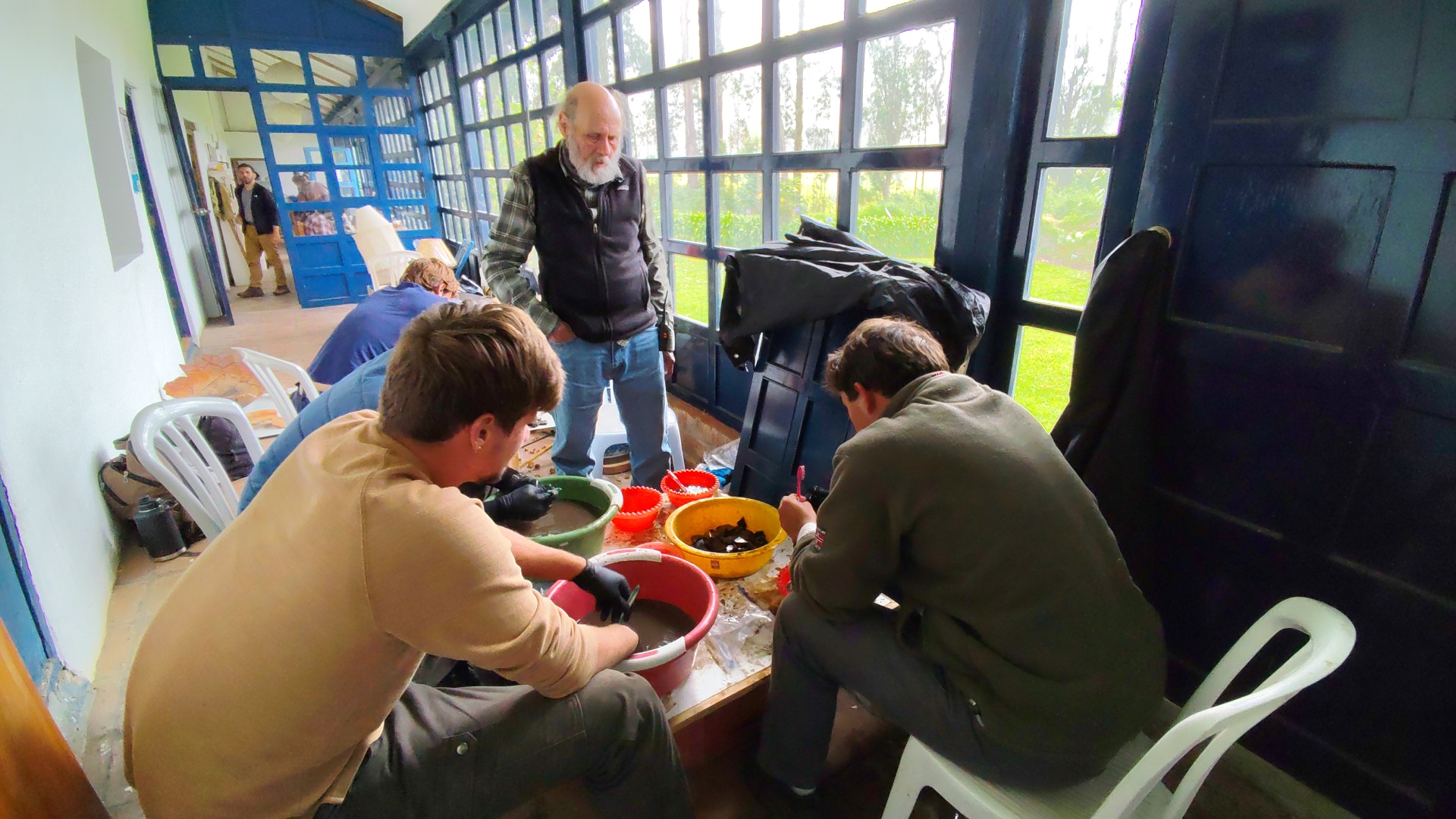
All of these tools played a major role on and off the field. It allowed us to excavate accurately and be able to carefully excavate artifacts and be able to clean artifacts as well. It also allowed us to create our grids and ensure we will excavate in the right area.
Share this article
Follow us
Latest articles
October 17, 2026
October 17, 2026