The IFR is celebrating our inaugural season of the Peru: Cajamarca Ethnoarchaeology Field School led by UCLA’s Dr. Solsiré Cusicanqui. Over the course of 17 days, students traced the threads of Andean history from museum collections in Lima, to key archaeological sites, and all the way to the highland town of San Miguel de Pallaques, where they worked side by side with master weavers preserving and innovating thousands of years of living textile traditions.
The project’s goal was twofold: to understand the deep cultural roots of weaving in Andean society, and to explore how archaeology and contemporary artisan practice can inform one another. The program affords a richly multidisciplinary experience for budding field researchers, integrating archaeology, ethnography, and community collaboration in its exploration of Cajamarca textile traditions. “I saw how archaeology directly informs and enriches historical understanding,” reflected Reina, an Anthropology major from California State University, Los Angeles. “I truly loved Cajamarca…I learned to connect physical evidence with written records, social structures, and cultural practices.”
In the first week, students explored some of Peru’s most important museums and archaeological sites, including the Pachacamac sanctuary complex and the Amano Pre-Columbian Textiles Museum. “A memorable moment was seeing the natural resources that pre-Columbian cultures used to dye their wool,” another participant shared. “It stood out because we’re learning what types of resources they utilized- and then we used them ourselves later in the program.”
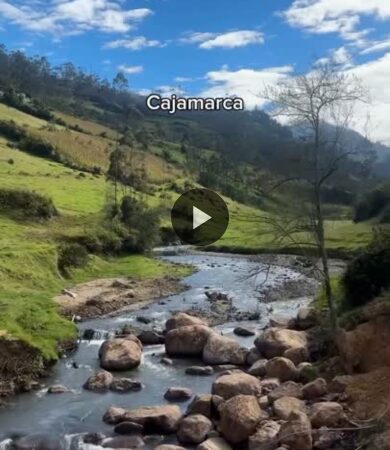
Video capturing a day of archaeology site visits during the program. Credit: Jimena Muñiz-Garreta
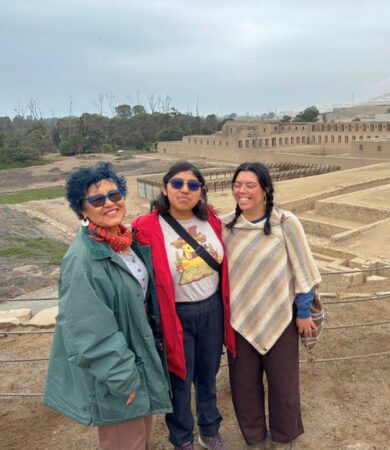
Field school students enjoying a visit to the Pachacamac archaeological site.
From Lima, the group traveled to Cajamarca and then into the mountains of San Miguel, where the program shifted into participant observation. Students shadowed members of the local master weavers’ association, documenting and participating in every step of the process, from shearing and spinning wool with a piruru (spindle whorl) to dyeing with locally gathered plants and weaving on a backstrap loom. “Getting to participate in combing and spinning the wool… stood out to me because it was much harder than it looked,” noted one student. “If you’re not used to it, your hands start to cramp up. It gave me insight into the work the women put into their textiles.”
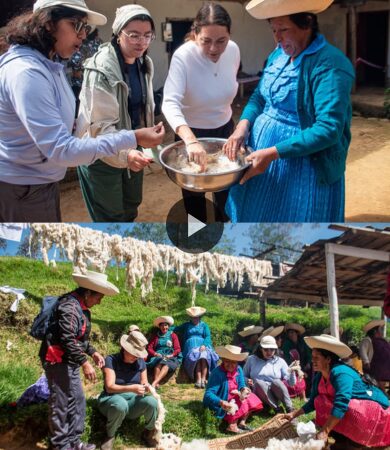
Field school students learning how to turn sheep wool into thread from master weavers. Video credit: Jimena Muñiz-Garreta
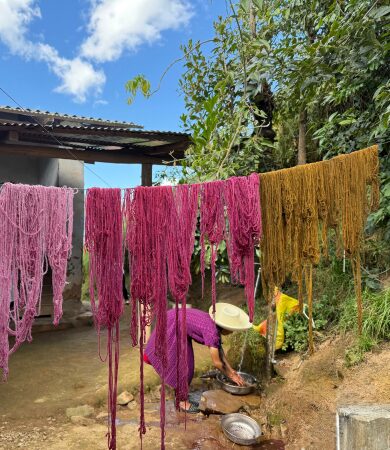
Master artisans hang the newly dyed thread out to dry in San Miguel de Pallaques.
More than building ethnographic field skills, the days in San Miguel offered moments of shared humanity and connection. “We had the honor of spending time and learning from the women artisans who welcomed us into their homes,” Reina summed up. “Not only did they teach us their techniques for preservation, they fed us and gave us insight into how they live.” The final days of the field school were spent weaving, reflecting, and having in-depth dialogue with the weavers’ associations about their social, political, and economic structures.
This first run of IFR’s Peru: Cajamarca Ethnoarchaeology program marks just the beginning of a long-term project. And judging by the enthusiastic feedback from this year’s participants, 2026 Cajamarca Ethnoarchaeology field school students have a lot to look forward to!
Share this article
Follow us
Latest articles
September 26, 2026
September 26, 2026
September 26, 2026