
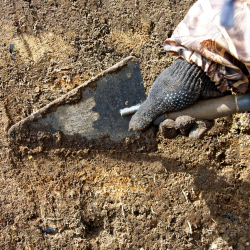
Two-million-year-old baby jaws are reshaping what we thought we knew about early human evolution. A new study published in Nature Communications and co-authored by paleoanthropologist Dr. José Braga, introduces evidence that different early human species had distinct facial and jaw traits from infancy, suggesting that the genus Homo was already more diverse and complex than we once believed.
The research examined three rare fossilized Homo infant skull fragments, one from Ethiopia attributed to Homo habilus and two from South Africa, from a species closely related to Homo erectus. Though tiny, these fossils fragments carry big implications. They show that different human species already followed separate developmental paths from birth, rather than just shaped by environment or lifestyle as they grew older. These early differences in skeletal and dental traits point to a common ancestor to all human species that likely predates the Quaternary Period. It also indicates that our evolutionary family tree is probabaly both older and has more branches than previously understood.
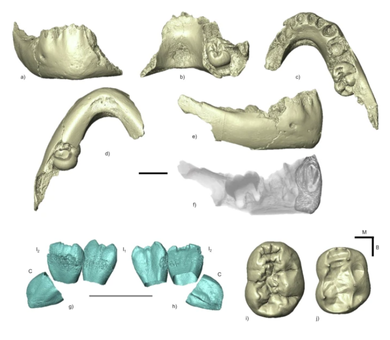
KW 7000 mandible, recovered from Kromdraai in South Africa. Credit: J. Braga et al.
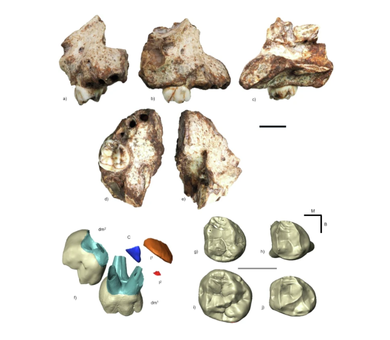
The DNH 83 right maxilla from Drimolen, South Africa. Credit: J. Braga et al.
One of the infant fossils studied, known as KW 7000, was unearthed at the UNESCO-listed Kromdraai site in the famous Cradle of Humankind, where students now have the opportunity to join IFR’s Human Origins Field School in South Africa led by Dr. Braga himself. The program offers hands-on excavation training at one of the most important fossil sites in the world and gives students a direct role in contributing to cutting-edge research rewriting what we know about human evolution.
The full article, Infant craniofacial diversity in Early Pleistocene Homo, is published in the journal Nature Communications. To learn more about studying paleoanthropology abroad and how you can join a future excavation, visit the IFR Kromdraai Human Origins Field School program page.
Share this article
Follow us
Latest articles

September 26, 2026
September 26, 2026

September 26, 2026