Before I left for my trip abroad, my experience in archaeology halted at my textbooks. Being an anthropology student, my work consists mainly of cultural analysis and writing papers. I had no previous exposure to the more physical demands of archaeology, such as lab and field work. Spending time as an archaeology student in Ireland was not only an academic advancement, it was a real dive into history, culture, and the exciting, raw process of discovery. During my fieldwork at The Green Fort in Sligo, Ireland, I learned just how diverse the work on a real archaeological project is. Additionally, I discovered the importance of flexibility during my time there.
A Day in the Life
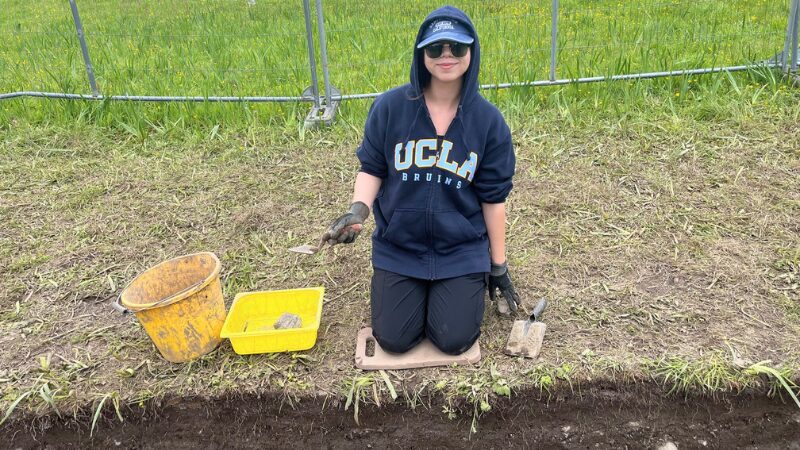
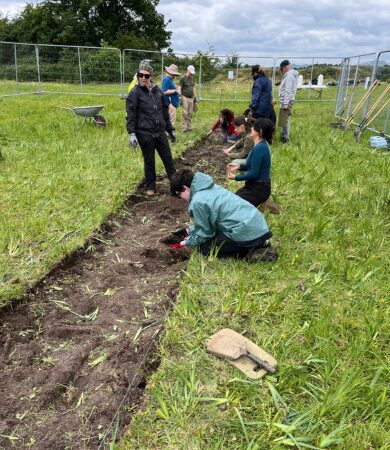
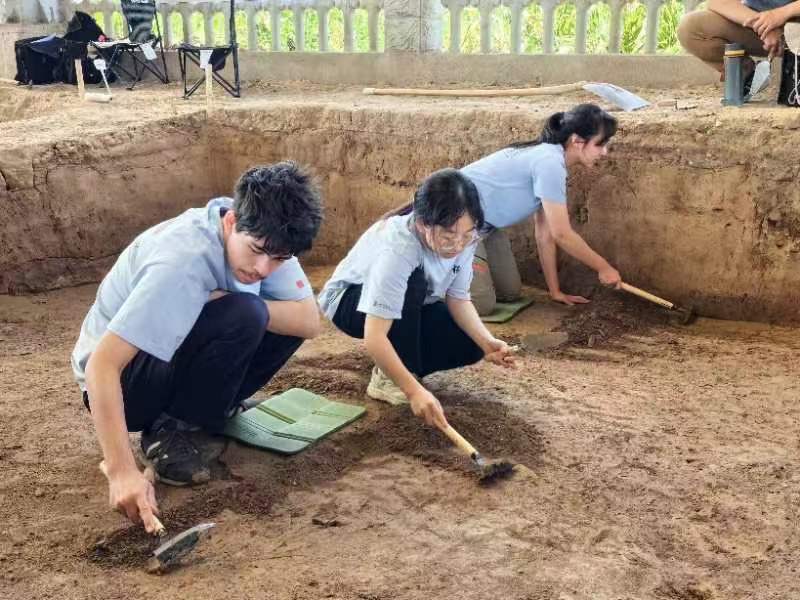
My days on the excavation usually started off with a survey of the previous day’s work and some light trowelling and sieving. After a short break, we would all branch off completing different tasks. We were able to choose for ourselves what to focus on each day. Whether it was taking levels on the trench, drawing a plan, taking photographs, or continuing with troweling. This style of work was both liberating and humbling. While I finally had some independence when it came to my research, it was a bit difficult trying to prioritize my tasks while simultaneously processing new data collected on the trench.
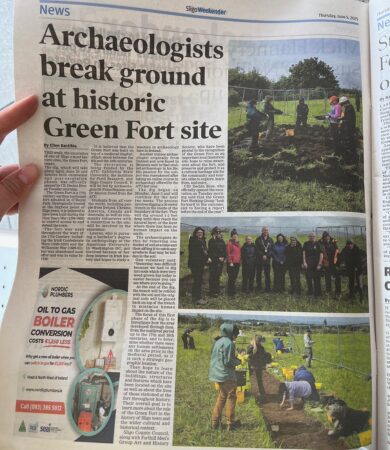
This site in particular had never been excavated before, meaning our information was limited to old journal entries, news articles, letters, and land titles. There was no physical evidence to go off of prior to this excavation. Therefore, any developments on the site were only able to be compared to historical documents. And the research was extensive. We had to constantly shift our theories on the events that might have created the layers and features in our trench.
Beyond the Data
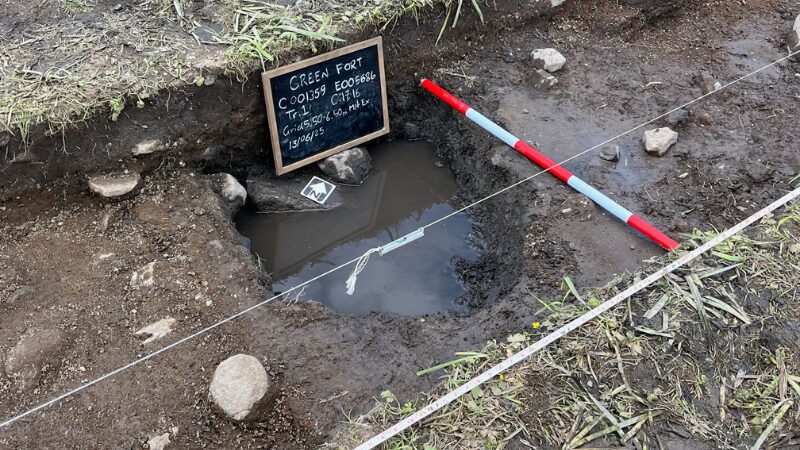
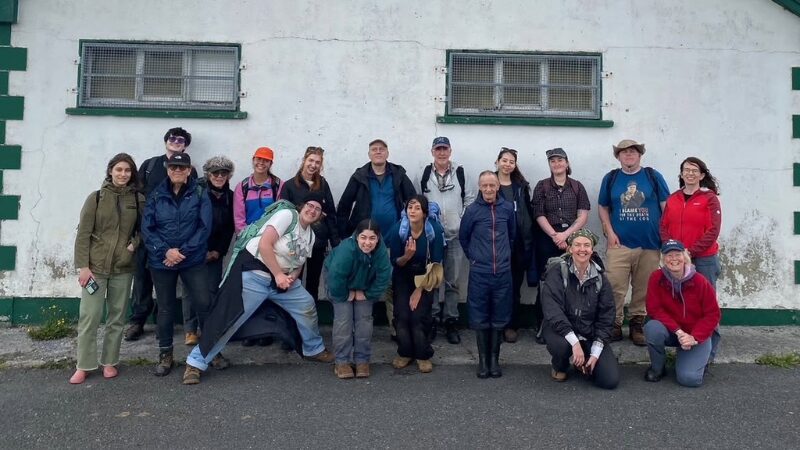
While the constant shift in data was quite frustrating, it taught me how to be more flexible with my thinking. In the field, you can be so confident in a theory and want to push that narrative for as long as you can only for a new discovery to completely upend it. My experience abroad taught me the value of communication and collaboration. A perfect example of this is when our team uncovered a water-filled pit at the center of our trench. At first, none of us were sure of what we had found. Not even the director. Until one of the community volunteers who specializes in plumbing, recognized the surrounding rock formations and suggested it may be a drain. The feature was later confirmed to be a French drain. A conclusion we may have never come to without the collaborative effort between our team and the community.
My Takeaway
Living and working abroad, I experienced what it meant to move from student to researcher. Navigating ambiguity, designing my own approaches, and learning when to follow the data and when to challenge it. As a student, most assignments are a solo effort. You alone are responsible for the research, the thinking, and the final product.
But, working on a large project in the field requires a division of labor. I quickly learned that real research is not linear, and things cannot be planned out the same way assignments are. By trusting my team and learning to communicate across perspectives, I can now say I am more confident in approaching and solving problems.
Share this article
Follow us
Latest articles
March 15, 2026
March 15, 2026
March 15, 2026